Processors & Corporates
Connecting Field Traceability to an Enterprise ERP
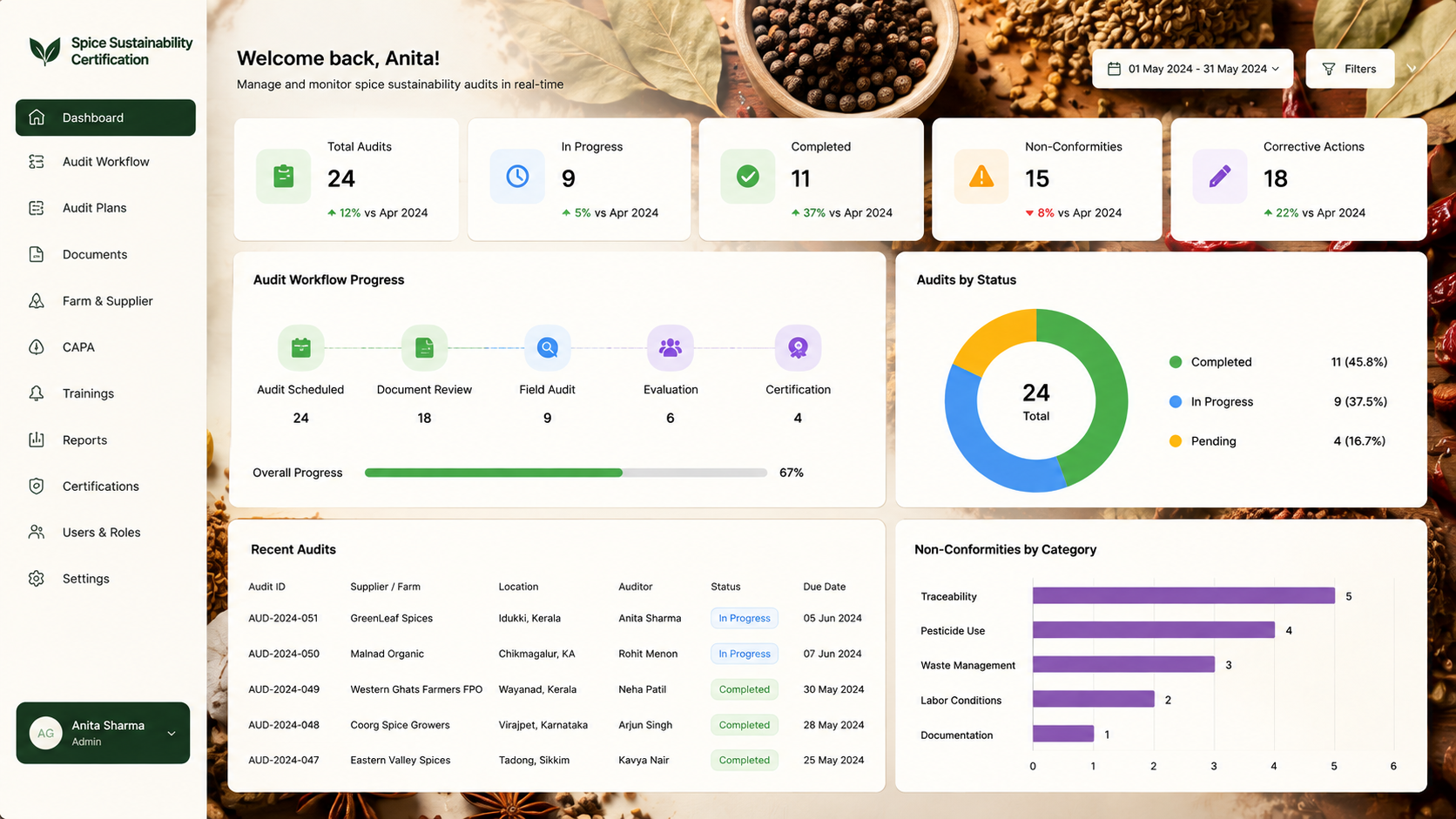
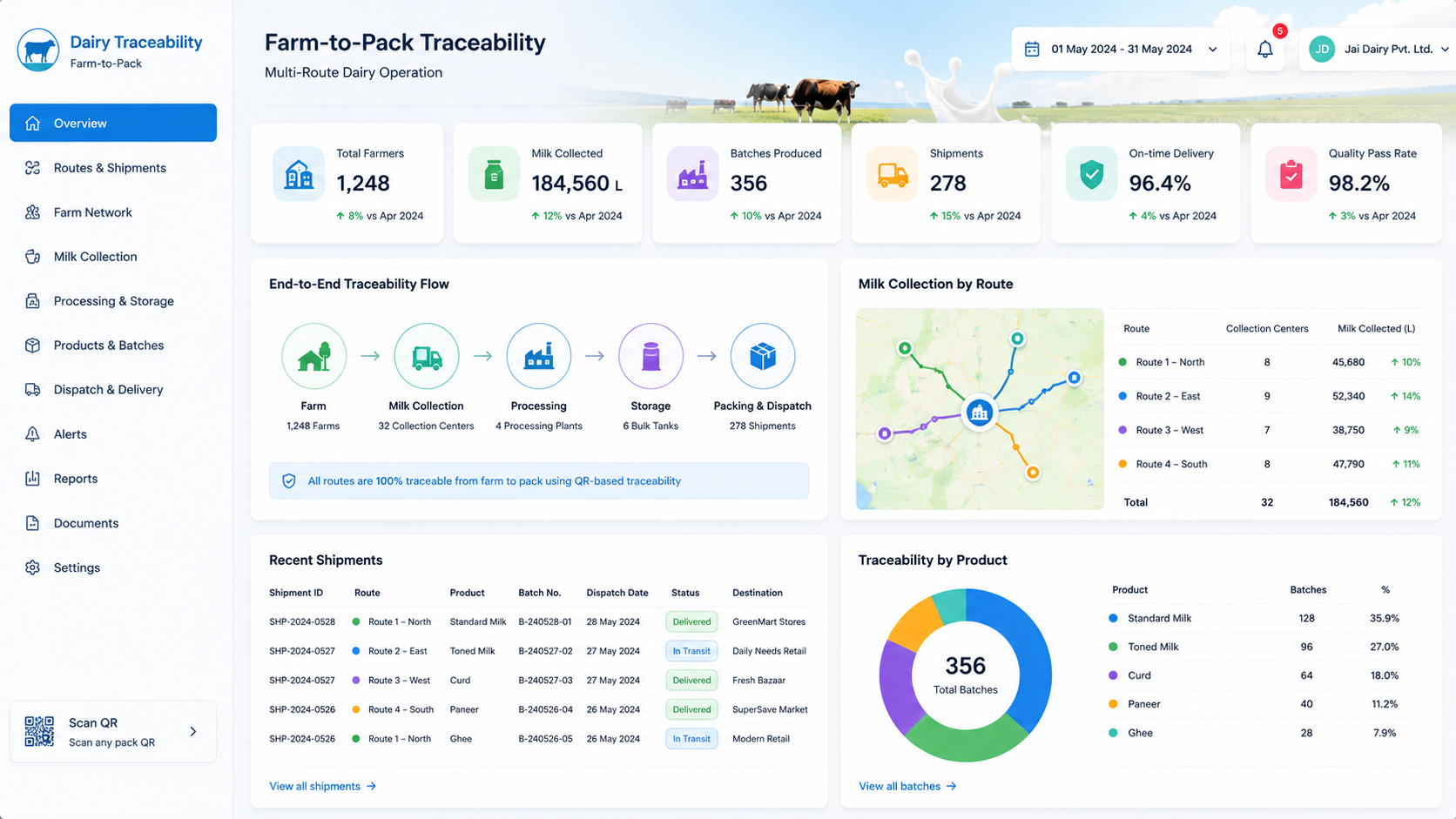
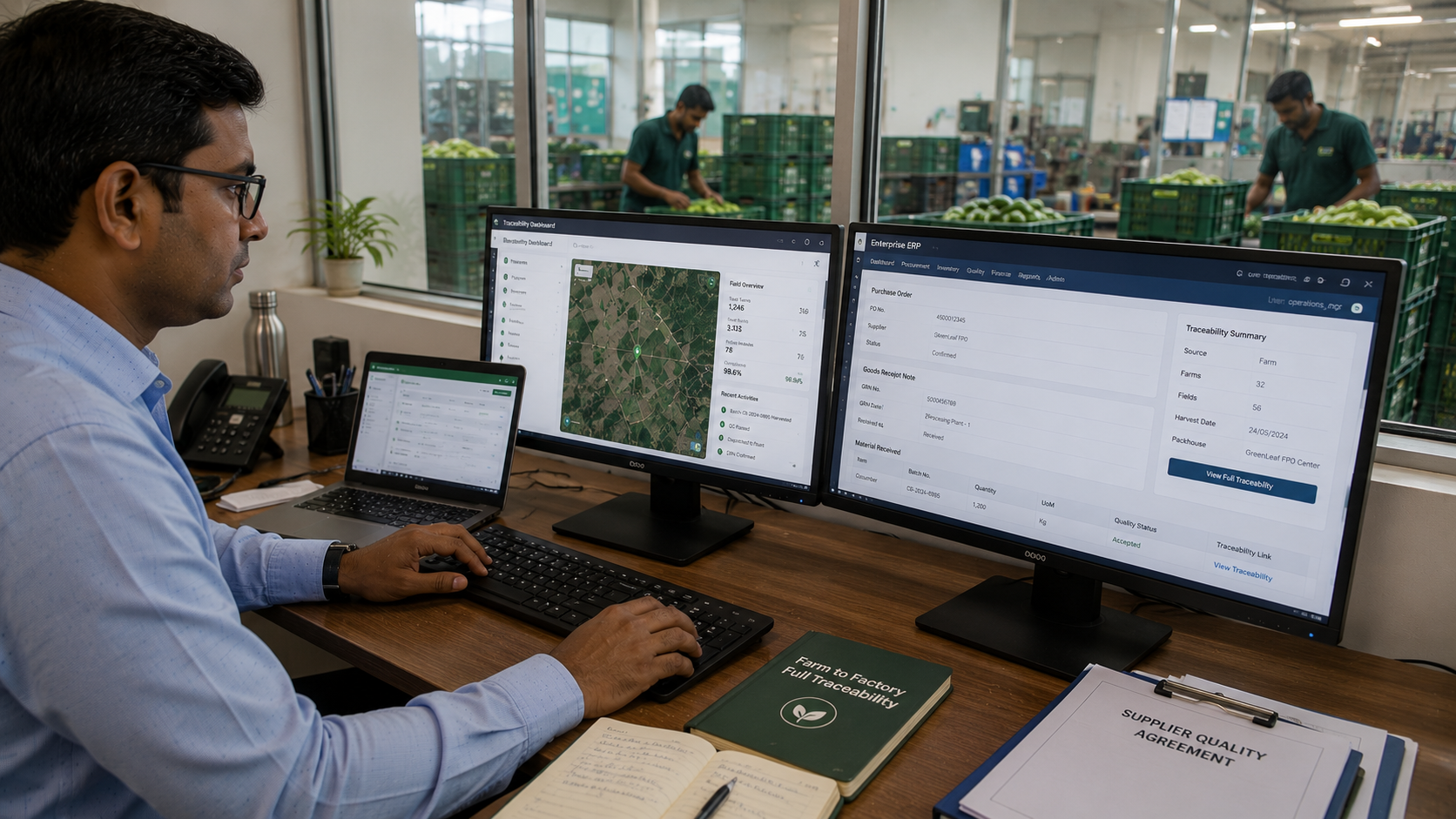
Procurement lives in the ERP, origin lives in the field. Value appears when the two reconcile automatically.
The challenge
- Purchase orders, vendor masters, inventory and settlements sit in the ERP; farm identity, plot geometry and practice data sit in field systems, if they exist at all.
- Manual CSV transfer between the two introduces transcription errors and a reconciliation lag of days, making compliance reporting a periodic project rather than a continuous state.
- Finance and sustainability teams report different volumes for the same season because their source systems never agree.
How the platform solves it
Automated data exchange
Scheduled, validated file transfer and API exchange move vendor, purchase order and inventory data between the ERP and the traceability layer without manual handling, with rejected records surfaced for review rather than silently dropped.
Vendor-to-farm resolution
ERP vendor codes are mapped to registered aggregators and their contributing farms, so a purchase order in finance resolves to plots in the field.
Continuous volume reconciliation
Field intake and ERP goods receipt are reconciled continuously, with variances flagged at the point they occur.
Single reporting basis
Compliance, sustainability and finance reporting draw on one reconciled dataset, ending the divergence between team-level numbers.
Outcomes
- Manual data entry and its error rate removed from the process
- Purchase orders traceable to plots without a reconciliation project
- Finance and sustainability reporting on the same volumes
- Compliance readiness as a continuous state rather than a quarterly scramble
See this configured for your supply chain.
A 30-minute walkthrough with your commodity, geography and compliance obligations on screen.
Book DemoRelated use cases