Carbon & Climate Programmes
District-to-State Programme Monitoring on a Shared Farmer Registry
Aggregated returns describe what happened months ago. In-season visibility is what lets a programme correct course.
The challenge
- Beneficiary records differ across schemes, so coverage, duplication and true reach cannot be measured.
- Delivery is self-reported by implementing partners with no field-verified evidence attached.
- Climate and impact reporting requires farm-level activity data that no scheme currently captures.
How the platform solves it
One deduplicated, consent-based registry
Farms and farmers are registered once with mapped plots and consent recorded, then reused across schemes rather than re-enumerated for each one.
Field-verified delivery tracking
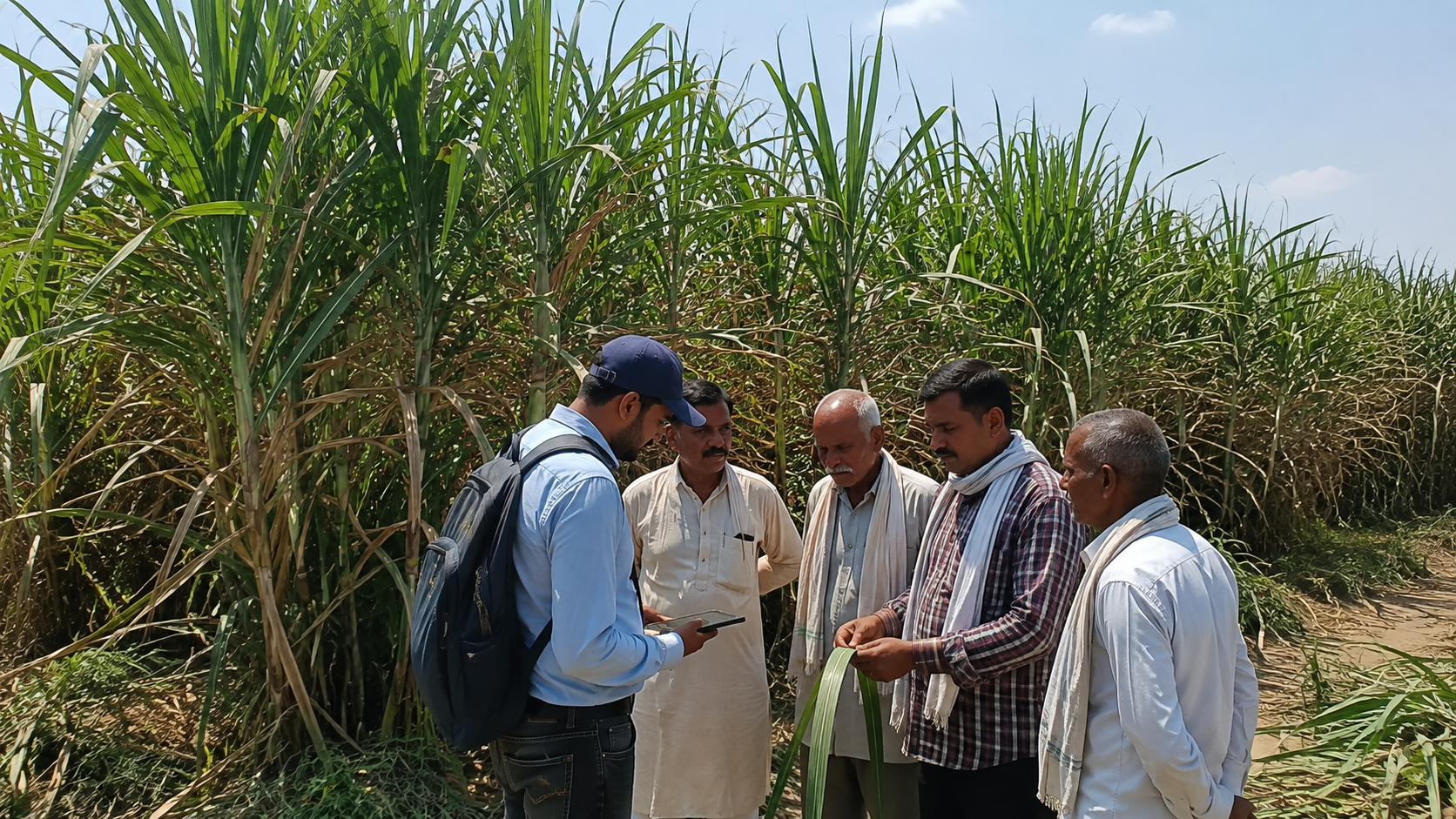
Intervention delivery is recorded at the point of contact with photographic and GPS evidence, replacing self-reported completion with verifiable events.
Operational and leadership dashboards
District officers see coverage, data quality, field activity and exceptions needing attention; state leadership sees comparison, ranking and trend across districts and commodities.
Baseline-to-endline impact measurement
Indicators — practice change, input use, yield, water and emissions intensity — are measured against a recorded baseline rather than inferred at closure.
Outcomes
- In-season visibility replacing post-season reporting
- One registry serving multiple schemes
- Delivery evidenced rather than self-declared
- Impact and climate reporting traceable to source records
See this configured for your supply chain.
A 30-minute walkthrough with your commodity, geography and compliance obligations on screen.
Book DemoRelated use cases