Exports & Compliance
Preserving Origin Integrity Across Sawmills and Timber Traders
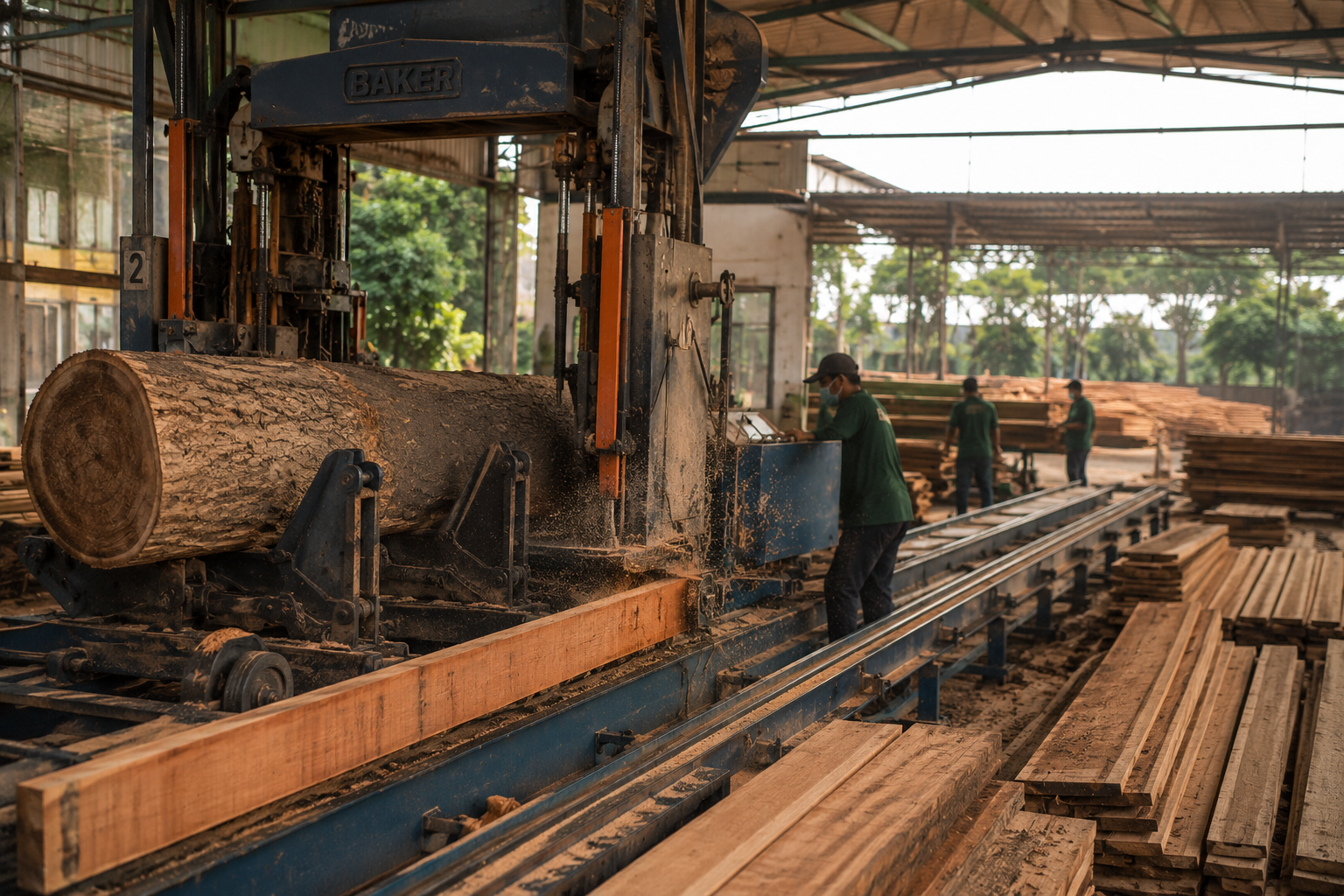
Timber chain of custody breaks at processing, where logs from many sources become indistinguishable sawn stock.
The challenge
- Logs from multiple harvest sites enter a sawmill and leave as graded sawn timber, plywood or furniture components with no physical marker connecting output to input.
- EUDR covers wood and a long list of derived products by customs code, catching furniture, plywood, paper and packaging exporters who have never considered themselves forest-risk traders.
- Legality evidence — harvest permits, transit passes, land tenure — sits in paper files across multiple parties and cannot be produced per consignment on demand.
How the platform solves it
Harvest site registration and legality capture
Each harvest site is registered with boundary geometry, species, permit references and tenure documents attached as evidence, creating a per-site legality file rather than a folder of loose paperwork.
Conversion ratio accounting at the mill
Input logs and output sawn volumes are recorded with species-specific conversion ratios, so implausible yields — the classic signature of undeclared material entering the mill — surface as exceptions.
Multi-tier supplier onboarding
Traders and intermediate processors are onboarded as tracked nodes with their own data-completeness scores, making the invisible middle of the chain visible to the exporter.
Consignment-level documentation packs
Land-use assessment, legality evidence, supplier chain and risk assessment are assembled per shipment and exported as a single due diligence package.
Outcomes
- Species and volume reconciliation across the processing step
- Legality evidence retrievable per consignment, not per filing cabinet
- Derived-product exporters brought into scope-readiness
- Audit-ready documentation without a manual assembly cycle
See this configured for your supply chain.
A 30-minute walkthrough with your commodity, geography and compliance obligations on screen.
Book DemoRelated use cases